What Should A Serious Listener Do When A New System Sounds Bright And Fatiguing?
A system that impressed in the showroom can turn hard and tiring at home. The cause is usually one of a handful of fixable problems, and swapping components should be the last resort rather than the first.
Diagnose before you spend anything
Brightness and fatigue are almost always a stack of small contributors rather than one villain: a reflective room with a hard floor and large windows, loudspeakers aimed straight at the ears, a revealing recording chain, and a listening level a few decibels higher than it used to be. Start by isolating. Play a familiar, warmly recorded album at a moderate level. If it still bites, the room and the setup are the prime suspects. Then listen to the same album through headphones fed by the same digital source. If the digital front end sounds fine there, the problem is downstream of it.
Check the basics that get overlooked in the excitement of a new installation. Confirm speaker polarity on both channels, look for tweeter level switches or jumpers on the loudspeaker's rear panel, check tone control and filter settings on the amplifier and converter, and review any sample rate conversion or volume normalization settings in your playback software. Look especially at anything that may have thinned the midbass, such as an over-eager room correction preset or a subwoofer crossover set too low, because a lean lower midrange reads to the ear as a bright treble even when the treble itself has not changed.
Keep reading: How Do You Build A Reference Hi-Fi System Without Wasting Money?, What Makes Loudspeakers And Amplifiers Truly Match In A Real Room?, Which Component Deserves The Largest Share Of Your Hi-Fi Budget?. See how Sonoholm helps you an audiophile guide to reference loudspeakers and hi-fi.
Fix the room and the placement first
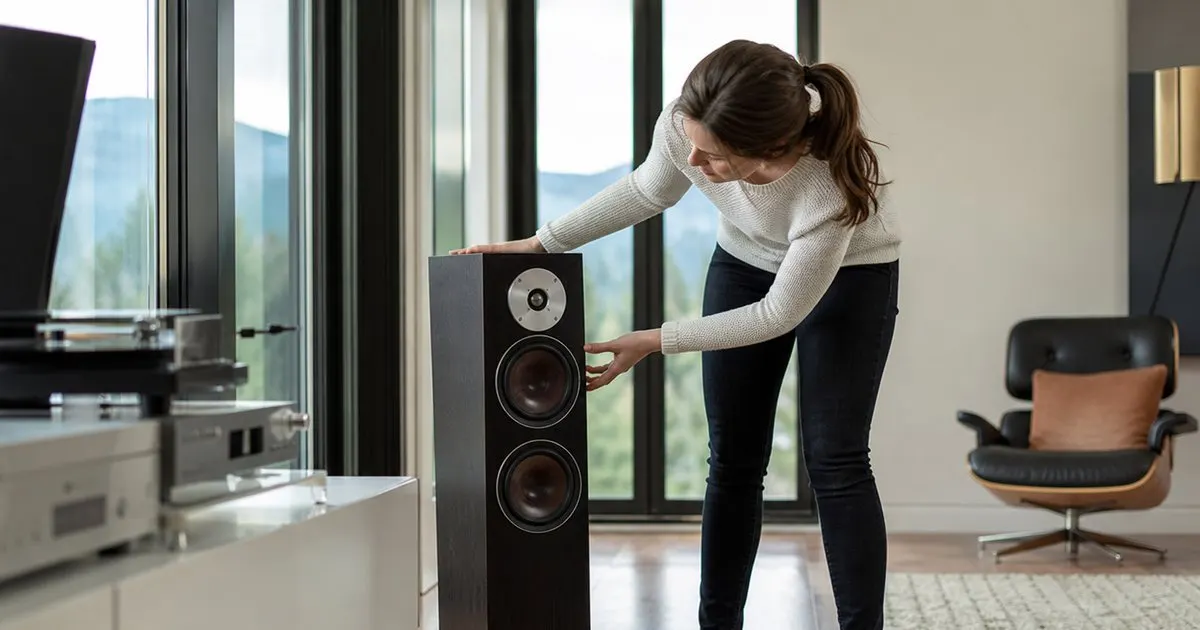
The first reflections from the side walls and the floor arrive so soon after the direct sound that the ear blends them together, and when those surfaces are hard, the result is the glare that listeners describe as brightness. A thick rug between the loudspeakers and the chair, and either absorption panels or a densely filled bookcase at the side wall reflection points, will do more to civilize a system than any component change. Then reduce the toe-in. Many reference loudspeakers are designed to be heard a few degrees off the tweeter axis, and pointing them straight at the listener puts the hottest part of the response directly in the ear. Related: How Do You Build A Reference Hi-Fi System Without Wasting Money?
Next, move the loudspeakers a few inches closer to the front wall to reinforce the midbass, or increase the distance between the loudspeakers and the listening seat so that the room's contribution rises relative to the direct sound. Pull the chair away from the back wall if it is pressed against it. Every one of these adjustments is free, reversible, and more powerful than anything on a dealer's shelf. Change a single variable at a time, listen for a full evening, and keep written notes, because the improvements are cumulative and easy to lose track of. Related: Why Does The Listening Room Shape Your Sound More Than Expected?
Settling, warm-up, and the problem of expectation
New loudspeaker drivers with stiff suspensions can sound a little tighter and leaner in their first tens of hours, and some mechanical settling is real, though dramatic transformations reported after weeks of playing are more often the listener adapting than the speaker changing. Either way, a new system deserves a few weeks of ordinary use before judgment. Solid state electronics generally sound their best after they have been powered for a while, and tube equipment needs genuine warm-up time before it sounds like itself. Judging anything cold, in the first hour, is unfair to the equipment. Related: Which Component Deserves The Largest Share Of Your Hi-Fi Budget?
Examine your source material and your listening level with honesty. Modern commercial masters are often compressed and equalized bright, and a streaming application set to a loud default level will fatigue anyone through any system. A phone app with a sound level meter, held at the listening seat, will tell you whether you are playing louder at home than you did at the dealer, which is extremely common after a purchase. A system that is genuinely more resolving than your last one will also expose bright recordings you used to enjoy, and that is information rather than a fault.
When a component genuinely is the problem
If the room is treated, the placement is settled, the levels are sane, and a few weeks have passed and the system still bites, then the matching is wrong. A very revealing loudspeaker driven by a lean amplifier from an analytical converter stacks the same tonal character three times over. Change the piece with the least sunk cost first, and do it by borrowing rather than buying: ask the dealer for a loan of an amplifier with a fuller reputation, or a different converter, and live with it for a weekend. Loudspeakers with metal dome tweeters are often more sensitive to setup than soft dome designs, but generalizing from that is risky. Related: What Makes Loudspeakers And Amplifiers Truly Match In A Real Room?
Finally, permit yourself a mild correction. A gentle shelving cut of a decibel or two above a few kilohertz, applied in the digital domain or through the amplifier's tone controls, is a legitimate tool that many experienced listeners use quietly. A modest room correction system that addresses only the bass region can also remove the peak-and-null behavior that makes the treble seem exposed. Tone controls are not a moral failing, and a 5,000 to 15,000 USD system that is enjoyed every evening with a small treble cut is worth infinitely more than a pure one that sits unused.
- Brightness is usually a stack of small causes, so isolate the room, settings, and source before blaming a component.
- A thick rug, side wall absorption, less toe-in, and a few inches of placement change fix more systems than any purchase.
- Allow a few weeks of settling at sensible levels, and measure your listening level rather than trusting your memory of the dealer's room.
- If a component truly is at fault, borrow an alternative before buying, and treat a mild treble cut as a legitimate tool.

Julien Jimenez
Julien Jimenez is an independent software builder based in Paris. He designs, ships, and operates focused SaaS products for small businesses and independent professionals. Read the full author page.
Music As The Artist Intended
An audiophile guide to reference loudspeakers and hi-fi. Sonoholm is built to help you put this into practice.
Build your systemMore from the Sonoholm blog
How Do You Build A Reference Hi-Fi System Without Wasting Money?
What Makes Loudspeakers And Amplifiers Truly Match In A Real Room?
Which Component Deserves The Largest Share Of Your Hi-Fi Budget?
Get the complete reference hi-fi audio guide
Our full buying guide, the price guide, and new research as we publish it. One email, no spam, unsubscribe any time.