How Much Difference Do Dedicated Circuits And Power Conditioning Make In A Reference System?
An independent look at what the mains supply actually does to a high-end system, which power upgrades are worth paying for, and which ones quietly limit your amplifier.
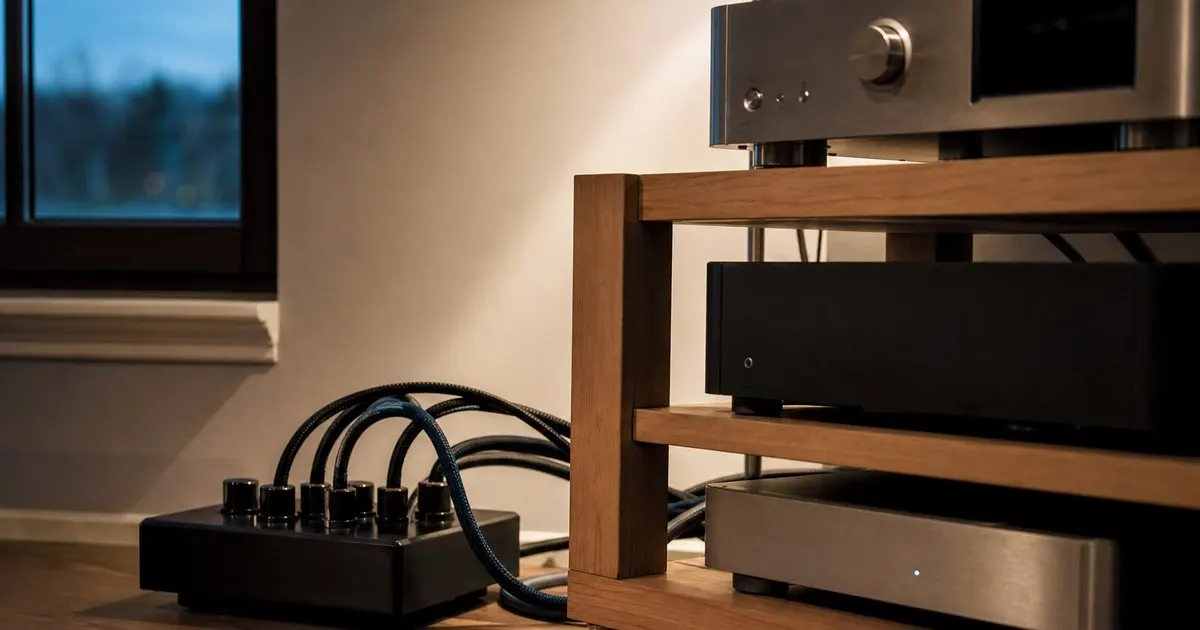
What Your Wall Outlet Actually Delivers To A Reference System
A US wall outlet is nominally a 120 volt, 60 Hz sine wave, but almost nothing in a modern house leaves that waveform alone. Switching power supplies in televisions, laptops, LED lamps and appliance inverters draw current in short spikes rather than smoothly, which flattens the tops of the sine wave and pushes harmonics back onto the shared wiring. Dimmers and motor controls add high frequency hash. Large loads such as a compressor starting on a hot afternoon can pull the voltage down briefly. None of this is a fault in your utility service. It is simply the electrical environment that every audio power supply has to work in, and it changes hour by hour.
Whether any of it reaches your ears depends on the equipment. A well engineered linear power supply in a power amplifier rejects a great deal of mains rubbish through sheer transformer mass, capacitance and regulation, which is one reason serious amplifiers are heavy. The components most exposed are the ones with small supplies and sensitive circuits running at very low voltages: streamers, digital to analog converters, phono stages and anything with a clock. That is also why listeners so often report that a system sounds better late at night. Part of that is the lower ambient noise in the house and the listener's own state of attention, and part of it is a genuinely cleaner supply once the neighborhood loads drop away.
Keep reading: How Do You Build A Reference Hi-Fi System Without Wasting Money?, What Makes Loudspeakers And Amplifiers Truly Match In A Real Room?, Which Component Deserves The Largest Share Of Your Hi-Fi Budget?. See how Sonoholm helps you an audiophile guide to reference loudspeakers and hi-fi.
Grounding, Hum And The Two Kinds Of Noise Buyers Confuse
Audible hum is a different problem from mains contamination, and no filter reliably cures it. A steady 60 Hz drone, or a buzzier version built from its harmonics, is almost always a ground loop: two chassis in the same system are referenced to earth by two different paths, so a small current flows through the interconnect shield and becomes signal. The usual culprits in a domestic system are a cable television coaxial feed entering the rack, a subwoofer or projector plugged into a different circuit, or a turntable ground lead landed on the wrong terminal. The fix is topological rather than financial. Bring every audio component back to one outlet on one circuit, isolate the incoming coax with a galvanic isolator, and confirm the turntable ground is properly connected to the phono stage. Related: Which Component Deserves The Largest Share Of Your Hi-Fi Budget?
One safety point deserves to be stated plainly, because online forums still repeat the opposite. Never defeat a safety ground pin to chase a hum. It is a serious shock hazard, it can void insurance and warranty cover, and the same result is available safely through proper isolation. The second, quieter category of noise is broadband hash that never announces itself as hum. It shows up as a slight glassiness on massed strings, a soundstage that sits flat against the speaker plane, and cymbals that sound like a texture rather than a struck object. You usually only recognize it after it is gone, which is exactly why power products need to be auditioned at home rather than bought on description. Related: Why Does The Listening Room Shape Your Sound More Than Expected?
What Genuinely Helps, In Order Of Value For Money
The single most reliable improvement is boring: one or more dedicated circuits run from the panel to the listening room, each on a substantial conductor, with all audio components fed from the same circuit and the same phase leg. This does two things at once. It removes your system from the wiring that feeds the refrigerator, the laundry and the home office, and it puts every chassis on a common ground reference, which prevents most loops before they start. A good quality outlet with a firm grip on the plug blades is a sensible companion upgrade. Costs vary widely by market and by how far the run has to travel, but this work is typically among the least expensive meaningful improvements in a reference system, and it is done once and never revisited. Related: How Do You Build A Reference Hi-Fi System Without Wasting Money?
Conditioners come in several families and they are not interchangeable. Passive series filters remove high frequency noise and are usually the safest starting point. Isolation and balanced transformers provide galvanic separation and can lower the noise floor markedly, at the cost of weight and some inrush behavior on switch on. Regenerators rebuild the waveform electronically and give the most control over voltage and distortion, with a price and a heat output to match. The critical tradeoff is current. A power amplifier can demand very large instantaneous current on transients, and a filter sized for source components will audibly compress dynamics if you feed a big amplifier through it. Most listeners land on the same arrangement: sources and digital through the conditioner, power amplifier straight to the dedicated wall outlet or into a high current stage designed for it.
How To Test Power Products Honestly Before You Commit
Power is the category where blind enthusiasm is most expensive, so structure the trial. Borrow the unit from a dealer or buy with a genuine return window, then listen over at least a week rather than one excited evening. Compare at the same time of day, at matched volume, with three or four recordings you know intimately, including one dense orchestral or large ensemble track and one sparse recording with a lot of decay. Judge two things specifically: the blackness between notes and the precision with which a voice or instrument occupies a point in space. If a conditioner is doing its job you will hear more space and more separation at low level, not a change in tonal balance. If it makes everything sound softer and politer, it is probably restricting your amplifier rather than cleaning your supply.
Sequence the spending honestly. Power belongs after loudspeakers, room treatment and amplification, not before them, and it will never rescue a mismatched system or a bad speaker position. In a system in the 5,000 to 15,000 dollar range, a dedicated circuit plus a modest filter for the digital front end is usually the right ceiling, and money beyond that is better spent on the parts of the chain doing the actual work. Have any panel work done by a licensed electrician who pulls the appropriate permit; an amateur run of heavy cable is a safety and insurance problem, and a properly documented circuit is also an asset when you sell the house. We may earn a commission on some links, which is exactly why we would rather you spend on an electrician than on a box. Related: What Makes Loudspeakers And Amplifiers Truly Match In A Real Room?
- A dedicated circuit feeding every component from one ground reference is the highest value power upgrade, and it is a one time job.
- Hum is a ground loop problem solved by topology and isolation, never by defeating a safety ground pin.
- Digital sources, streamers and phono stages benefit most from filtering; heavy power amplifiers usually prefer a direct wall connection.
- Trial any conditioner at home for a week and reject it if dynamics feel restrained rather than backgrounds feeling quieter.

Julien Jimenez
Julien Jimenez is an independent software builder based in Paris. He designs, ships, and operates focused SaaS products for small businesses and independent professionals. Read the full author page.
Music As The Artist Intended
An audiophile guide to reference loudspeakers and hi-fi. Sonoholm is built to help you put this into practice.
Build your systemMore from the Sonoholm blog
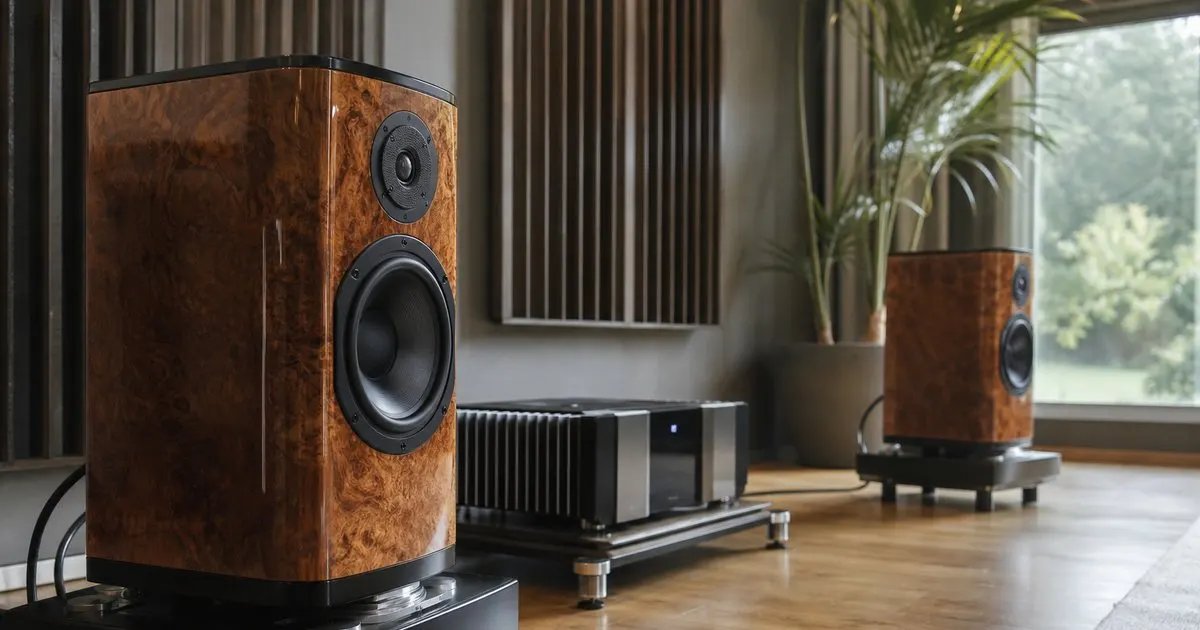
How Do You Build A Reference Hi-Fi System Without Wasting Money?
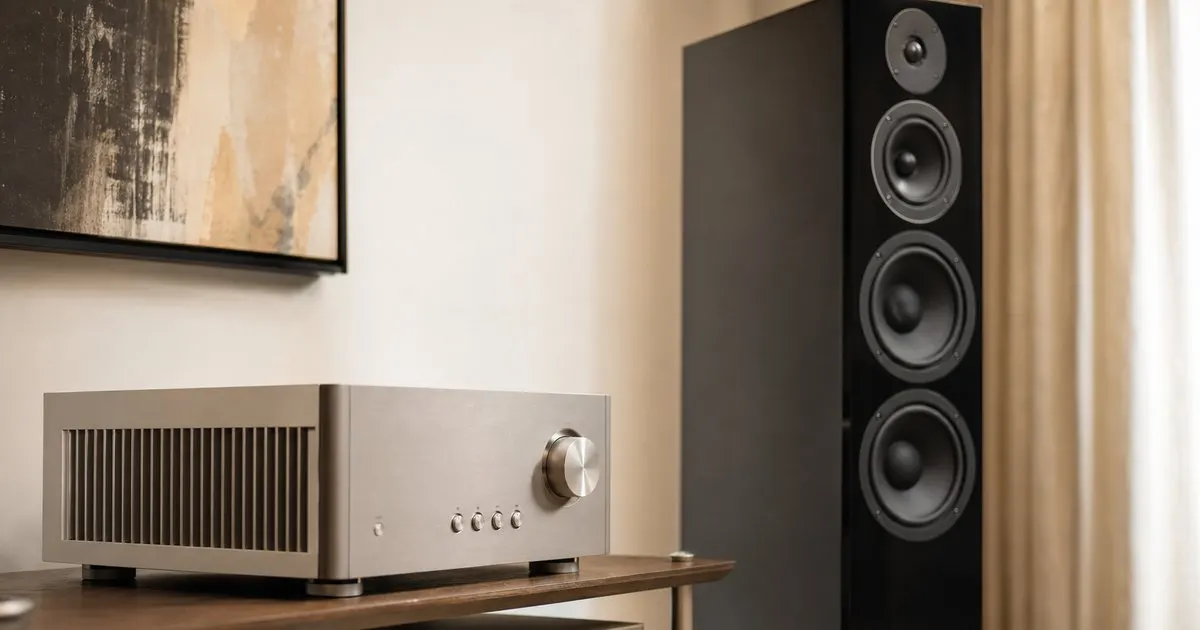
What Makes Loudspeakers And Amplifiers Truly Match In A Real Room?
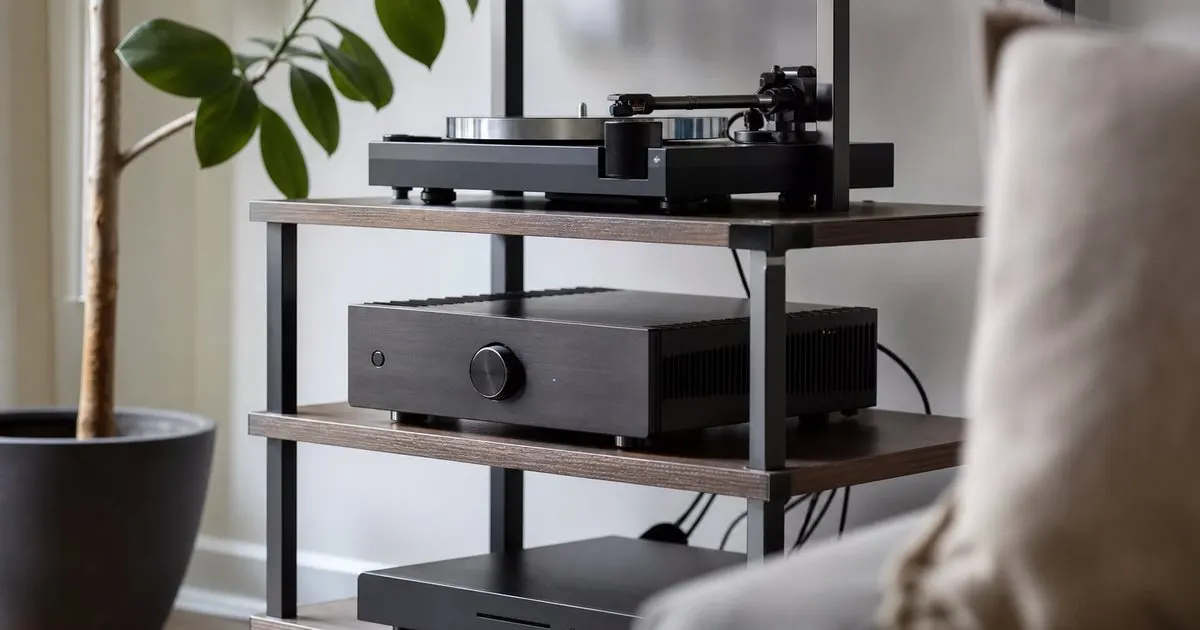
Which Component Deserves The Largest Share Of Your Hi-Fi Budget?
Get the complete reference hi-fi audio guide
Our full buying guide, the price guide, and new research as we publish it. One email, no spam, unsubscribe any time.